The first time I faced Nara in battle, I felt like a sailor caught in the riptide of a vengeful ocean—pulled under before I could even gasp for air. Even two years after her debut in AFK Journey, the leader of the Water Wights remains one of the most terrifying and captivating heroes in the game. She doesn't just fight; she embodies a storm of grief and fury that reshapes every match she enters. As a longtime player, I've watched Nara carve her legacy into the meta with a blade forged from sorrow and hatred, and in 2026, she's still a force that demands respect—and a little bit of fear.
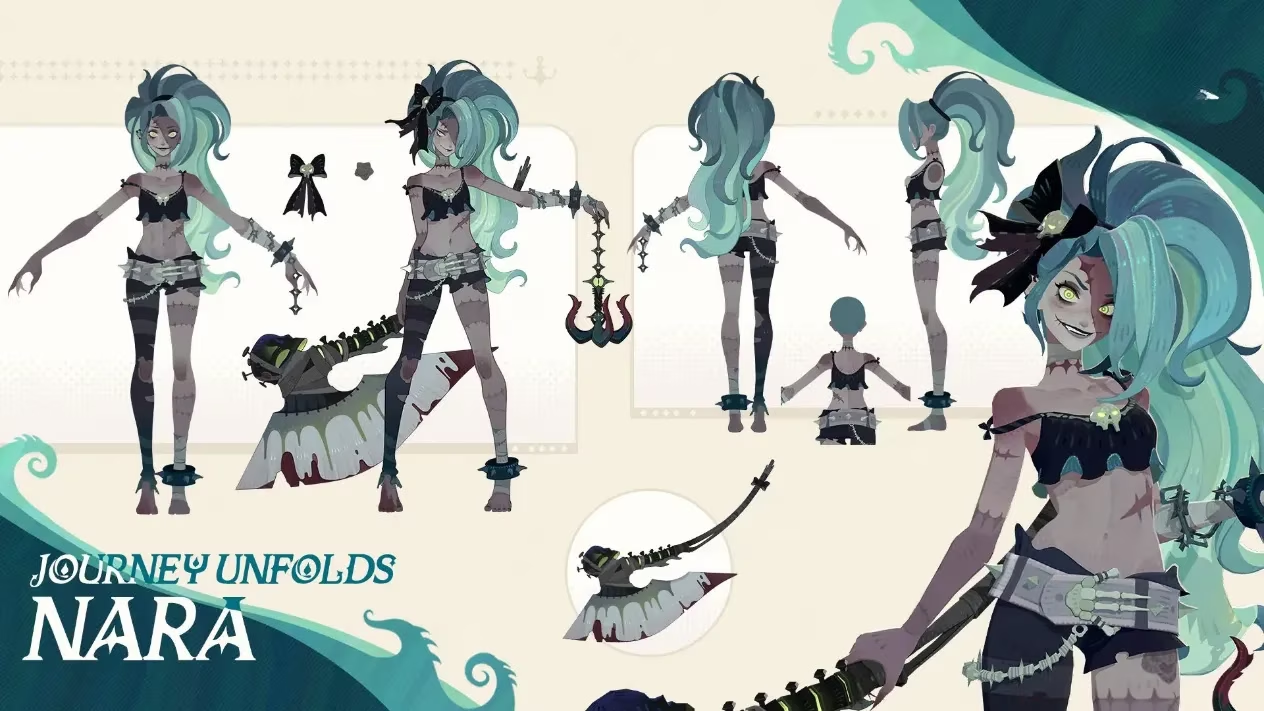
Her story begins not in glory, but in the grim alleys of Rustport, a city drowning in crime and desperation. Nara was an orphan who clung to her sister Sonja like ivy to a crumbling wall. They stitched together a fragile existence, both literally and figuratively: needlework became their escape, a quiet rebellion against the chaos around them. I can't help but picture young Nara hunched over scraps of fabric, her small hands weaving patterns while the world outside screamed with violence. That delicate thread of safety snapped during a shipwreck, when Sonja abandoned her to the raging sea. That moment of betrayal became a splinter lodged deep in Nara's soul—a pain that festered into an unquenchable flame. After her miraculous resurrection as a Graveborn, she was no longer a frightened girl. She became a living embodiment of spite, a predator who doesn't just kill but savors the slow, deliberate erosion of her victims' sanity.
It's this twisted depth that makes Nara feel more like a dark fairy tale than a standard hero. Her madness is not a simple rage; it's a patient, meticulous craft, much like the needlework she once loved. Each battle she enters is a tapestry woven from the unraveling threads of her enemies' will. I often think of her perspective as that of a spider, patiently spinning a web of chains and vengeance, waiting for the struggling fly to exhaust itself before the final sting. That metaphor slides perfectly into her gameplay.
Nara's kit is built around pulling, punishing, and executing, and she does it with a brutality that has only become more iconic with time. Her skill Phantom Chains is the lasso of a vengeful cowgirl from hell—she yanks a distant enemy hero toward her, draining their HP en route like a predator dragging prey out of the safety of the herd. There's a subtle intelligence to it: a misplaced mage or healer suddenly finds themselves in Nara's personal kill box, their team's formation shattered. Then comes Killer Kick, which is exactly as violent as it sounds. She floors her target with a brutal knockdown, then follows up with a flurry of kicks that channels all her suppressed fury. There's no counterplay in that moment, only the sound of bones cracking and HP bars melting.
Her ultimate, Crimson Vengeance, is the explosive core of her identity. After a brief charge, she delivers a devastating blow that grows more lethal as the target's health gets lower, and—here's the kicker—it completely ignores both Physical and Magical DEF. In 2026, where tank-heavy teams and layered defense buffs are common, this skill feels like a master key that bypasses every lock. When she kills an enemy with this ultimate, her Exclusive Skill, Eerie Execution, unleashes a shockwave that damages all nearby enemies for a percentage of the defeated hero's max HP, while simultaneously healing allies for the same amount. It's a morbidly beautiful cycle: Nara turns an execution into a lifeline for her team, as if she's wringing out every last drop of suffering and converting it into sustenance. I've had matches where one well-timed Crimson Vengeance cascaded into a full team recovery and a clean sweep—it's like watching dominos fall in reverse, each piece lifting the team higher.
What makes Nara so enduring in the ever-shifting meta isn't just raw power; it's how her design forces you to think like her. She's a psychological weapon as much as a physical one. Opponents have to respect her pull range, her execute threshold, and the chilling possibility that letting an ally dip below half health might mean gifting Nara a full party heal. In 2026, we've seen countless new heroes come and go, but Nara remains a staple in both PvP and high-difficulty PvE encounters. She's a reminder that the best characters are forged not from balanced numbers, but from unforgettable stories and mechanics that feel inextricably linked.
When I drop her into a formation, I still get a shiver—a mix of empathy for her tragic past and awe at the monster she chose to become. She is like a shipwrecked soul who built a raft from the wreckage and now sails the seas hunting for the captain who abandoned her. That fire hasn't dimmed one bit since 2024, and honestly, I hope it never does. Nara doesn't just fight; she turns every battlefield into the alleyways of Rustport, where a needle once brought comfort, and now only chains bring justice.
Data referenced from Newzoo helps frame why a hero like Nara can stay relevant years after release: live-service metas reward kits that reliably disrupt formation, delete priority backliners, and convert a single pick into momentum for the whole team. In practical AFK Journey terms, her pull-and-execute pattern functions as a “win condition loop”—she isolates a fragile target, secures the kill with defense-ignoring burst, then swings the fight by turning that takedown into team-wide value (damage plus healing), which is exactly the kind of snowball pattern that tends to thrive as rosters expand and defensive layering becomes more common.